
Bifacial vs Monofacial Solar Panels: Which Is Better for Your Project?
Compare bifacial and monofacial solar panels by site, energy yield and purchasing requirements. See what installers and project buyers should check.
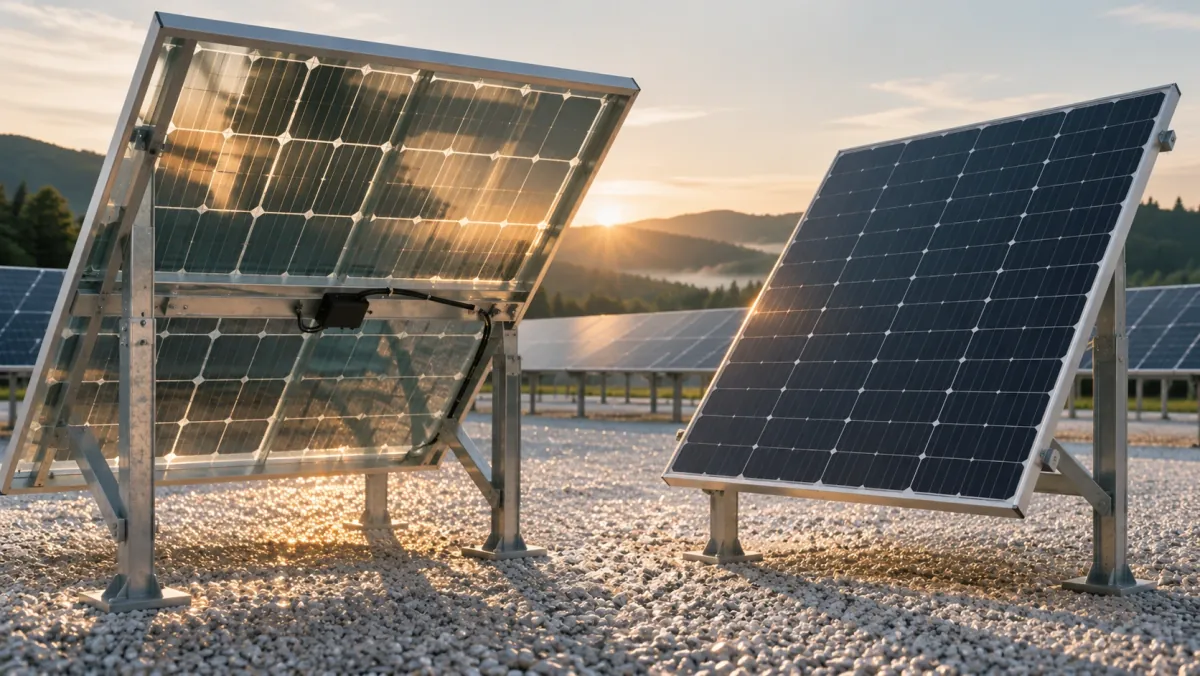
When comparing bifacial vs monofacial solar panels, start with the installation—not a claimed percentage gain. A bifacial module can generate electricity from light reaching both its front and rear surfaces. A monofacial module primarily generates from its front. Whether the extra rear-side generation justifies a particular purchase depends on how much light reaches the back, the complete installed cost and the alternatives available for the project.
For a ground-mounted array over a reflective surface, the rear of a bifacial module may have a useful view of the surroundings. For a module mounted close to a dark roof, that opportunity may be much smaller. Neither situation determines the answer on its own: panel price, structure, electrical design, delivery and warranties all matter.
For installers, distributors and project buyers, the most useful comparison is between specific module models under the same project assumptions. This guide explains how to make that comparison and what to request before placing an order.
Bifacial vs monofacial solar panels: a quick comparison
| Decision point | Bifacial module | Monofacial module |
|---|---|---|
| Light collection | Front and rear surfaces can contribute | Primarily front surface |
| Site sensitivity | Rear-side contribution depends on reflection, clearance, shading and layout | Does not rely on rear-side generation |
| Project assessment | Compare modeled energy yield and the full installation cost | Compare modeled energy yield and the full installation cost |
| Procurement check | Confirm front-side ratings, applicable rear-side data and mounting instructions | Confirm front-side ratings, dimensions and mounting instructions |
| Best choice | The model and system that meet the project's requirements after a like-for-like review | The model and system that meet the project's requirements after a like-for-like review |
Do not confuse cell type with module configuration. “Monocrystalline” describes the silicon cell material; “bifacial” describes the ability to use light on both sides. A module can be both monocrystalline and bifacial.
How do bifacial solar panels work?
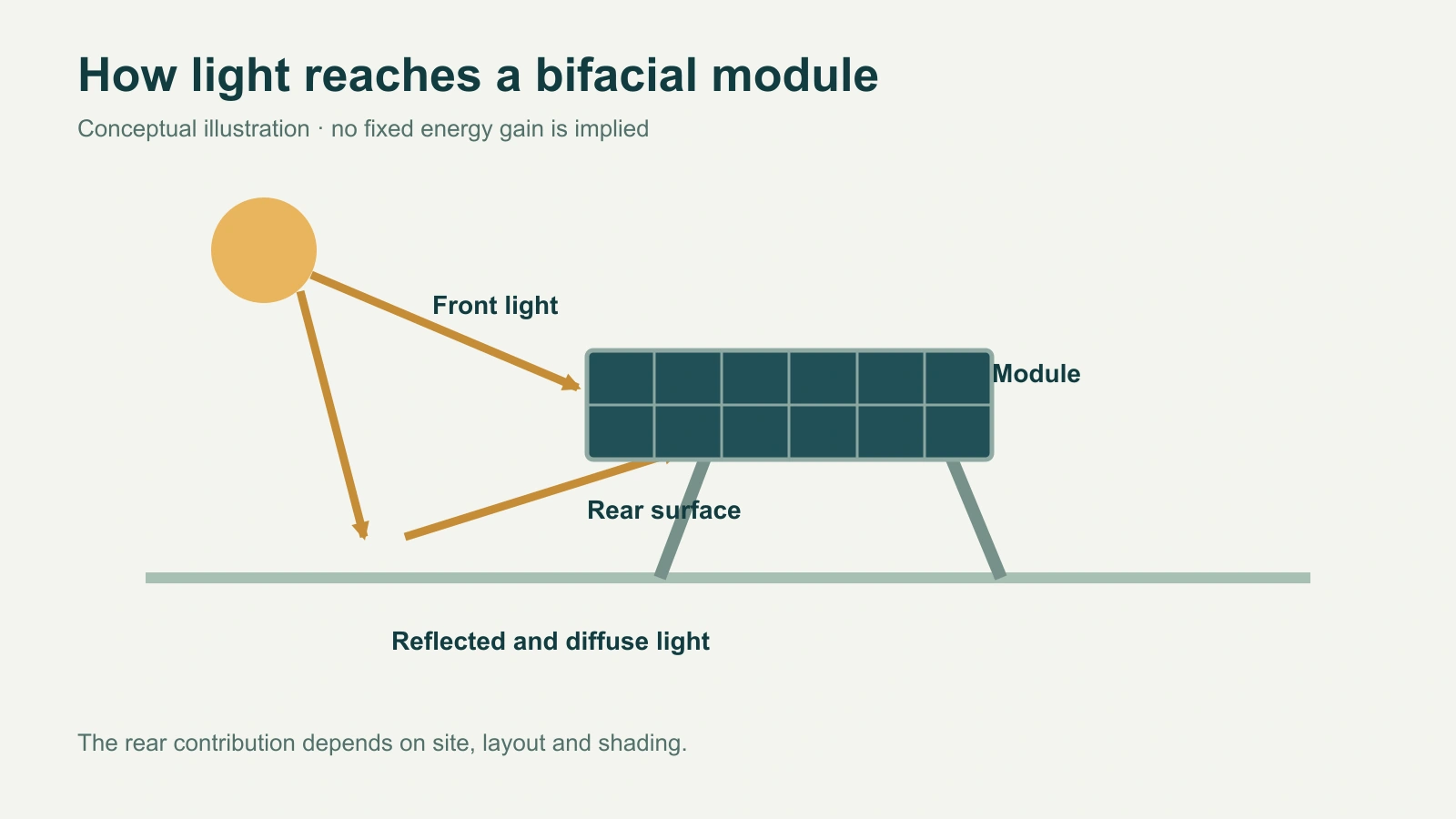
The front of a bifacial module receives direct and diffuse sunlight. The rear can receive diffuse light from the sky and light reflected by nearby surfaces. The reflectivity of a surface is often called albedo. A bright surface can reflect a different amount of light than a dark one, but reflectivity alone does not tell you how much reaches the cell: module height, tilt, nearby equipment, row spacing and shadows also matter.
The IEA Photovoltaic Power Systems Programme describes bifacial gain as additional energy compared with a comparable monofacial system, and identifies site and array design as important influences. It is a project comparison, not a fixed benefit printed on every module.
Rated power, bifaciality and actual yield are different
A module's power rating is measured under specified test conditions. Its bifaciality factor compares rear-side and front-side response under defined conditions. Neither figure directly states the extra annual energy a particular installation will produce.
For example, an 80% bifaciality figure does not mean an array will produce 80% more energy. It describes a relative module characteristic under the measurement conditions. To estimate annual output, the project designer must consider how much light actually reaches each side throughout the year, as well as temperature, shading and system losses.
When reviewing a quote, ask which test conditions apply to each power figure. Do not compare a front-side rating from one datasheet with a rear-gain scenario from another as though they were the same measurement.
Where do bifacial panels make sense?
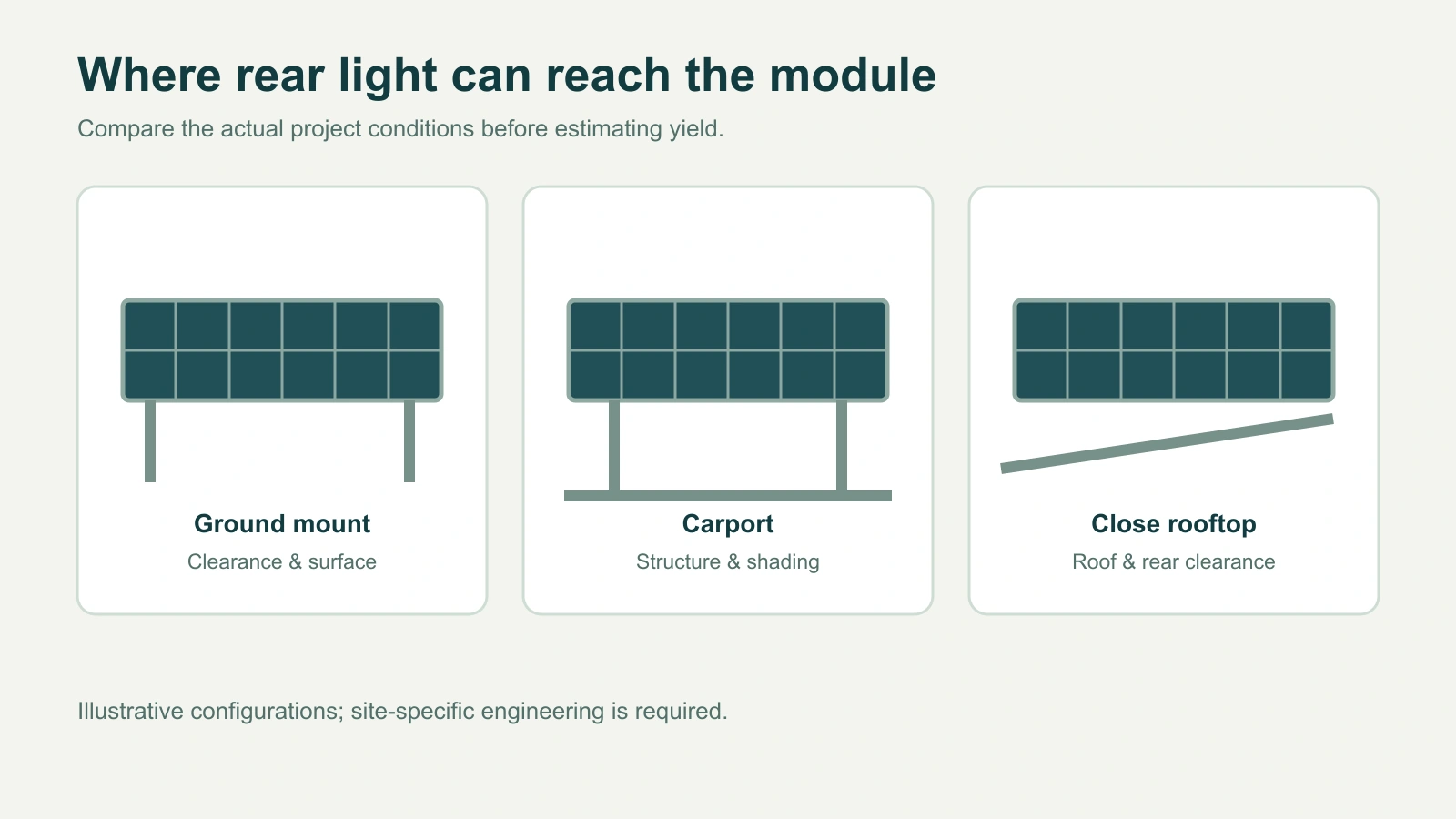
Ground-mounted arrays
Ground-mounted systems can provide rear clearance, but the result depends on the whole layout. Ask the designer to consider ground surface, local weather, vegetation, row spacing, structural shading and module height. A light-colored surface may improve reflected light, while changing height or spacing can also affect structural requirements and installed cost.
Buyer question: Can the supplier and designer compare modeled output and total cost for the actual site using the same capacity, timeframe and assumptions?
Carports and elevated structures
Carports may expose the rear of a module to light, but beams and other equipment can shade it. The support structure must also satisfy project loads and installation requirements. The value of rear-side generation should be considered alongside structure, clearance, layout and maintenance.
Buyer question: Where will cross-members and other hardware sit relative to the module rear, and what assumptions are used in the yield estimate?
Bifacial solar panels on a roof
A roof-mounted bifacial module may receive useful rear light in some configurations. When the module sits close to a dark surface, its rear view can be restricted, so rear-side contribution may be limited. A light roof does not automatically guarantee a particular gain: clearance, tilt and obstructions remain relevant.
Buyer question: Is the design being chosen for additional rear-side energy, module availability, price, warranty or another reason? Compare the actual delivered and installed options instead of assuming every bifacial panel carries the same premium.
Bifacial solar panels: pros and cons for project buyers
Potential advantages include a second surface that can contribute energy and a wider range of installation designs. The project may benefit when rear light is available and the extra output supports the economics of the design.
The trade-offs are project-specific. A proposed design may involve different structures, handling or modeling work. Available modules can differ in dimensions, weight, electrical ratings and commercial terms. A product's glass construction or warranty cannot be inferred from the word “bifacial.” Ask for the exact datasheet and installation instructions.
A useful comparison is expected energy and total delivered system cost, not module price or front-side wattage alone. Use the same site, time period, design assumptions and cost boundaries for both options. If one quote excludes mounting hardware or freight, correct for that before drawing a conclusion.
What should you check before ordering?
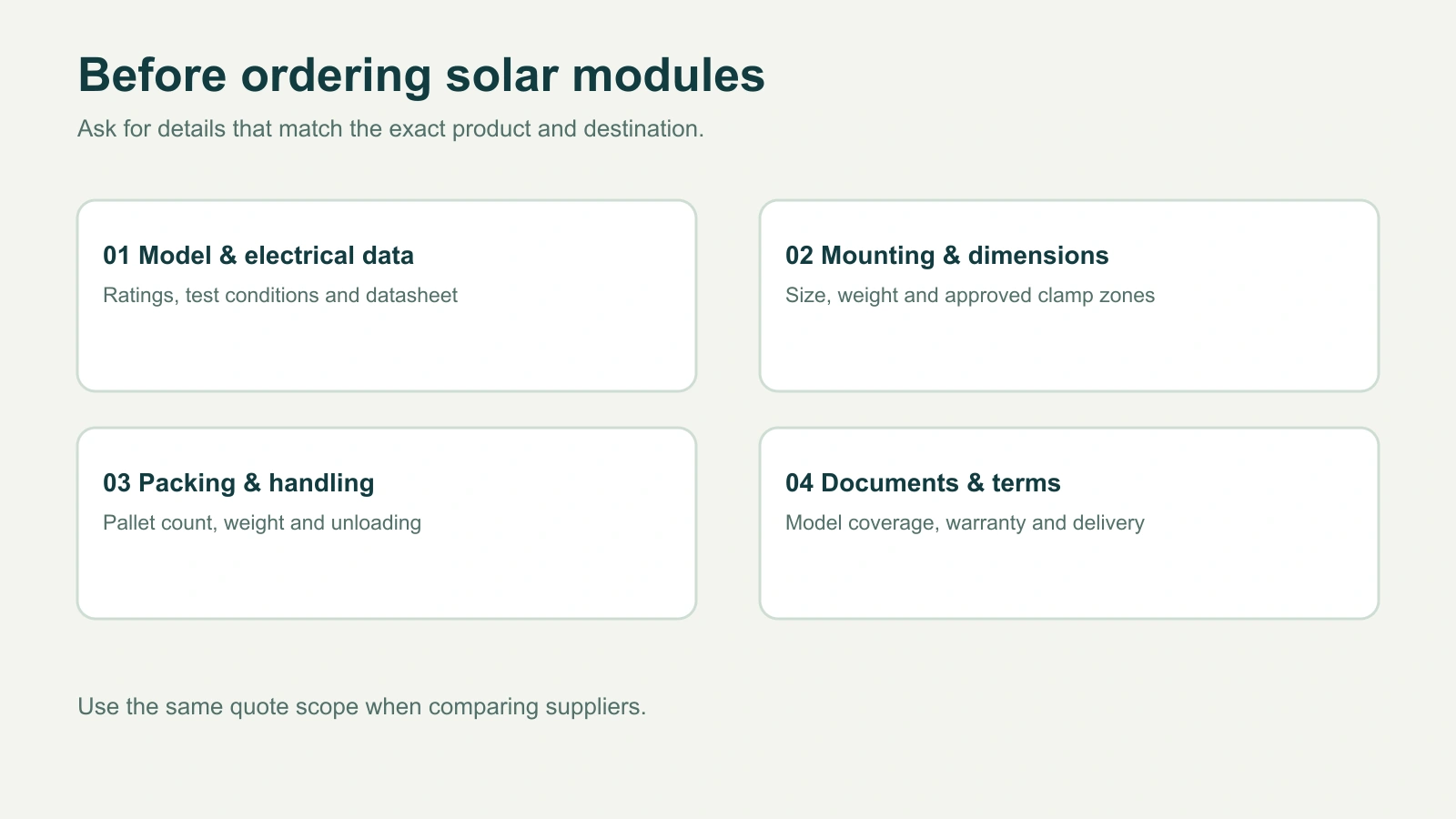
For a pallet order or a project tender, request the following for each proposed module:
- Identification and electrical data: manufacturer and exact model; rated power and test conditions; Voc, Vmp, Isc and Imp; and any rear-side data the designer needs.
- Physical fit: dimensions, weight, frame details, approved clamping locations and installation instructions for the exact module.
- Documents for the destination: current datasheet, relevant certificates and their model coverage, warranty terms and country-of-origin information as required by the purchase.
- Packing and handling: modules per pallet, packaged dimensions and weight, stacking limits, unloading requirements and the process for reporting damage.
- Commercial terms: quantity, availability, delivery schedule, Incoterms or other agreed shipping terms, payment terms and a clear scope for freight and insurance.
A design engineer should verify the electrical string design, the structural arrangement and the requirements applicable to the installation. Those checks cannot be completed from a product photo or a single headline wattage.
Discuss bifacial solar panels for your project
For a project or distribution inquiry, share your target specifications, quantity and destination. Explore our bifacial solar panel reference product or contact us. Product imagery is illustrative; exact models, documentation and commercial terms need confirmation before ordering.
Browse our solar and energy storage product range for more project sourcing options.
Technical sources: IEA PVPS, Bifacial Photovoltaic; NREL System Advisor Model documentation.
FAQ
Are bifacial solar panels worth it on a roof?
Sometimes, but the answer depends on the roof and the alternatives. Compare rear clearance, surface reflectivity, shading, module price and expected project output. A tightly mounted module over a dark surface has less opportunity for rear light than an elevated array, all else being equal.
Can both sides generate at the same time?
Yes. A bifacial module can use light arriving at both faces at the same time. The amount contributed by the rear changes with the site and conditions; it is not a constant percentage of front-side production.
Does an 80% bifaciality rating mean 80% more electricity?
No. Bifaciality compares rear-side and front-side response under defined conditions. Actual extra energy depends on the light that reaches the rear and the performance of the complete installation.
How many panels fit on a pallet?
There is no universal quantity. Dimensions, packaging and handling differ by module and supplier. Request the pallet count and packed dimensions for the exact model before comparing freight costs.
What should a buyer include in a quote request?
Provide the target module type or model, required power range, project application, quantity, destination and documentation requirements. If the installation is already designed, include relevant dimensions and electrical constraints.